

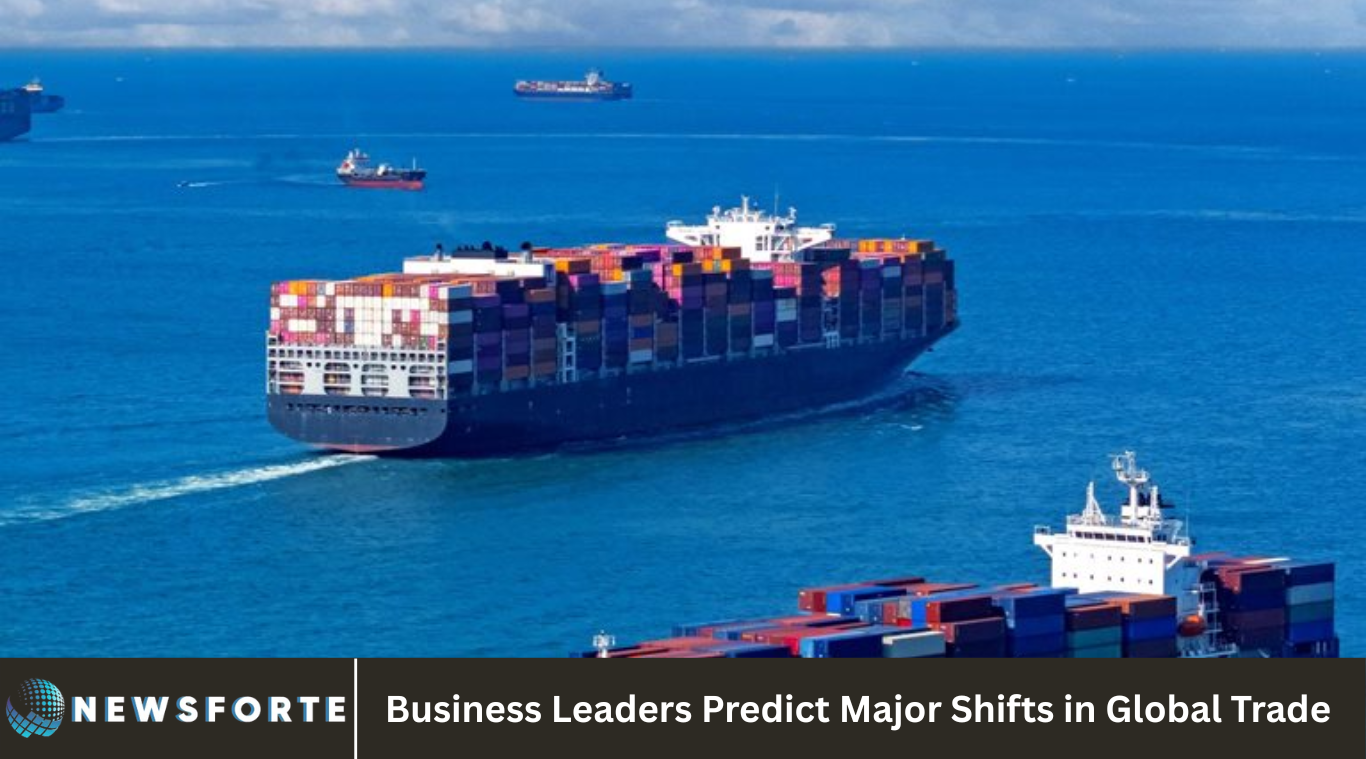
Global trade is constantly changing as businesses respond to economic conditions, technology, consumer demand, government policies, and geopolitical developments. Business leaders around the world are increasingly expecting major changes in how goods, services, and capital move between countries.
Companies are reviewing their supply chains, exploring new markets, investing in technology, and looking for ways to become more flexible. These changes could influence manufacturing, shipping, retail, technology, agriculture, and many other industries. The future of global trade may become more diversified, technology-driven, and focused on resilience.
Why Global Trade Is Changing
Global trade has traditionally depended on international supply chains that connect manufacturers, suppliers, distributors, and customers across multiple countries.
This model has helped companies reduce costs and access larger markets. However, recent economic and geopolitical challenges have shown businesses that highly concentrated supply chains can create risks.
Companies are therefore looking for ways to make their operations more flexible and resilient.
Supply Chain Diversification
One of the biggest expected changes is greater diversification of supply chains.
Businesses that previously depended heavily on one country or region may look for additional suppliers elsewhere.
This approach can reduce dependence on a single source and help companies respond to unexpected disruptions.
Diversification may increase costs in some cases, but many businesses see it as an important investment in long-term stability.
The Rise of Regional Manufacturing
Some companies are considering moving portions of production closer to their main customers.
Regional manufacturing can reduce transportation distances and make supply chains easier to manage.
It can also help companies respond more quickly to changes in consumer demand.
However, establishing manufacturing operations in new locations requires investment in factories, workers, infrastructure, and logistics.
Technology and Global Trade
Technology is becoming increasingly important in international commerce.
Businesses can use digital platforms to communicate with suppliers, track shipments, analyze markets, and manage international transactions.
Artificial intelligence and advanced analytics can also help companies forecast demand and identify potential supply chain problems.
Technology may make global trade more efficient while also changing how companies manage international operations.
Artificial Intelligence in Supply Chains
Artificial intelligence can analyze large amounts of information from different parts of a supply chain.
Companies can use AI to forecast demand, optimize inventory, identify delays, and improve logistics planning.
Predictive systems may help businesses respond to potential disruptions before they become serious problems.
As AI becomes more accessible, smaller companies may also gain access to advanced supply chain tools.
Automation in Manufacturing
Automation is changing how products are manufactured.
Robotics, AI-powered systems, and automated equipment can help companies improve production efficiency and maintain consistent quality.
Higher automation may also reduce dependence on certain types of manual labor.
At the same time, businesses will need skilled workers who can operate, maintain, and improve automated systems.
Changing Consumer Demand
Consumer expectations are also influencing global trade.
Customers increasingly want faster delivery, greater product variety, transparent sourcing, and convenient online purchasing.
Companies need to adapt their international supply chains to meet these expectations.
E-commerce has made global products easier to access, creating new opportunities for businesses of different sizes.
Growth of Cross-Border E-Commerce
Online shopping has made it easier for companies to sell products internationally.
Small and medium-sized businesses can use digital platforms to reach customers in other countries without building traditional physical stores.
Cross-border e-commerce can expand market opportunities, although businesses still need to manage shipping, taxes, regulations, payments, and customer service.
The Role of Shipping and Logistics
Shipping remains essential to global trade.
Companies are investing in logistics technology to improve transportation planning, tracking, warehousing, and delivery.
Digital systems can provide businesses with better visibility into where products are located and when they are expected to arrive.
Improved logistics could help companies reduce delays and manage international operations more effectively.
Geopolitical Changes
Geopolitical developments can have a major effect on international commerce.
Changes in diplomatic relationships, trade policies, sanctions, tariffs, and international agreements can influence where companies source materials and manufacture products.
Business leaders therefore need to consider political developments when making long-term investment decisions.
Trade Policies and Tariffs
Government trade policies can influence the cost of importing and exporting goods.
Tariffs can increase the price of imported products, which may affect businesses and consumers.
Changes in trade agreements can also create new opportunities or restrictions.
Companies increasingly need to monitor policy developments in the countries where they operate.
The Importance of Trade Agreements
International trade agreements can make it easier for companies to do business across borders.
Agreements may reduce tariffs, establish common standards, and simplify certain trade procedures.
Changes to these agreements can influence investment decisions and supply chain strategies.
Emerging Markets
Business leaders are also looking toward emerging markets for future growth.
Growing populations, rising incomes, expanding digital connectivity, and increasing consumer demand can create opportunities for international companies.
However, entering a new market requires an understanding of local regulations, culture, competition, infrastructure, and customer preferences.
The Growth of Digital Trade
Services are becoming an increasingly important part of international commerce.
Software, consulting, financial services, digital entertainment, online education, and other services can be delivered across borders without traditional physical shipping.
This allows businesses to reach international customers more easily.
Digital trade is likely to become even more important as internet connectivity improves.
The Future of International Payments
International payments are also evolving.
Businesses are looking for faster and more efficient ways to send and receive money across borders.
Digital payment systems can simplify international transactions, while developments in financial technology may create additional options for businesses.
Companies still need to consider currency risks, security, regulations, and transaction costs.
Sustainability and Global Trade
Environmental concerns are influencing international business decisions.
Companies are increasingly examining the environmental impact of manufacturing, transportation, packaging, and supply chains.
Some businesses are investing in renewable energy, efficient transportation, recyclable materials, and more sustainable production methods.
Environmental considerations could become a more important part of international trade strategies.
The Growth of Green Supply Chains
A green supply chain focuses on reducing environmental impact throughout the production and distribution process.
Businesses may examine where raw materials come from, how products are manufactured, how goods are transported, and what happens when products reach the end of their useful life.
Consumers and regulators may increasingly encourage companies to provide greater transparency about these practices.
The Importance of Resilience
Business leaders are increasingly focusing on supply chain resilience rather than simply minimizing costs.
A highly efficient supply chain may not always be the most resilient.
Companies may accept slightly higher costs in exchange for having multiple suppliers, additional inventory, or alternative transportation routes.
This approach can help businesses respond to unexpected disruptions.
Nearshoring and Friendshoring
Some companies are considering strategies known as nearshoring and friendshoring.
Nearshoring involves moving production closer to the main market, while friendshoring generally refers to sourcing from countries viewed as reliable strategic partners.
These approaches can reduce certain geopolitical and transportation risks.
However, they may also increase production costs compared with traditional low-cost sourcing models.
Impact on Small Businesses
Changes in global trade will not only affect large corporations.
Small businesses can also benefit from digital platforms that allow them to reach customers internationally.
At the same time, smaller companies may have fewer resources for dealing with complex international regulations, shipping costs, and supply chain disruptions.
Access to technology and reliable logistics will therefore be important for small businesses seeking international growth.
Opportunities for Developing Economies
Changes in global supply chains could create new opportunities for developing economies.
Companies looking to diversify production may consider countries with competitive labor costs, growing infrastructure, favorable trade policies, and expanding technology sectors.
This could support manufacturing investment and create employment opportunities.
However, countries need strong infrastructure, skilled workers, stable policies, and reliable institutions to attract long-term investment.
Workforce Changes
The future of global trade will also affect workers.
Automation may reduce demand for some repetitive tasks while increasing demand for technology, engineering, logistics, data, and management skills.
Workers may need to develop new abilities as businesses adopt more advanced technologies.
Education and professional training can help employees adapt to these changes.
The Role of Data
Data has become a valuable resource for international businesses.
Companies can use data to understand customers, monitor supply chains, forecast demand, and evaluate new markets.
Better data can help businesses make faster and more informed decisions.
However, international data use also creates privacy, security, and regulatory challenges.
Cybersecurity and Global Commerce
As trade becomes more digital, cybersecurity becomes increasingly important.
Companies need to protect payment systems, customer information, supply chain data, and internal networks.
A major cyberattack can interrupt business operations and create significant financial losses.
Strong cybersecurity practices will therefore become an increasingly important part of international trade.
Global Competition
Businesses operating internationally face competition from companies across the world.
Technology allows customers to compare products and services more easily.
Companies need to compete through price, quality, innovation, customer service, reliability, and brand reputation.
Global competition can encourage businesses to improve while giving consumers more choices.
What Business Leaders Are Watching
Business leaders are likely to continue monitoring economic growth, interest rates, trade policies, consumer demand, geopolitical developments, transportation costs, and technology trends.
These factors can influence decisions about manufacturing, investment, hiring, and international expansion.
The ability to respond quickly may become an important competitive advantage.
What the Future of Global Trade Could Look Like
Global trade is unlikely to disappear. Instead, it may become more flexible and diversified.
Businesses may use multiple suppliers, regional production centers, digital platforms, advanced logistics systems, and AI-powered tools.
International trade could become more technology-driven while companies place greater emphasis on resilience and risk management.
Challenges Ahead
The transformation of global trade will not be simple.
Companies may face higher production costs, changing regulations, geopolitical uncertainty, transportation challenges, and technology-related risks.
Businesses will need to balance efficiency with resilience while remaining competitive in international markets.
Why Adaptability Matters
The ability to adapt may become one of the most important qualities for businesses operating globally.
Companies that can adjust their supply chains, adopt useful technologies, understand changing customer needs, and respond to policy changes may be better prepared for the future.
Businesses that rely too heavily on old strategies could struggle as global trade evolves.
Frequently Asked Questions
Why is global trade changing?
Global trade is changing because of technology, geopolitical developments, changing consumer demand, supply chain disruptions, trade policies, economic conditions, and growing interest in sustainability.
What is supply chain diversification?
Supply chain diversification means using multiple suppliers, production locations, or transportation routes instead of depending heavily on one source or region.
How is technology changing global trade?
Technology is improving international trade through AI, automation, digital platforms, data analytics, online payments, supply chain tracking, and advanced logistics systems.
Will regional manufacturing become more common?
Regional manufacturing may become more common as businesses seek greater supply chain resilience and shorter transportation routes, although costs and infrastructure will influence these decisions.
What will global trade look like in the future?
Future global trade is likely to be more digital, diversified, automated, and focused on resilience. Businesses may combine international operations with regional production and advanced technology.
Conclusion
Business leaders are expecting major shifts in global trade as companies respond to changing economic conditions, technology, geopolitical developments, consumer expectations, and supply chain risks. Businesses are increasingly exploring supply chain diversification, regional manufacturing, artificial intelligence, automation, digital commerce, and sustainable operations.
These changes could create new opportunities for companies and emerging markets while also introducing new challenges. The future of global trade will likely depend on how effectively businesses balance cost, efficiency, resilience, innovation, and sustainability. Companies that remain flexible and prepared for change may be better positioned to succeed in an increasingly connected global economy.