

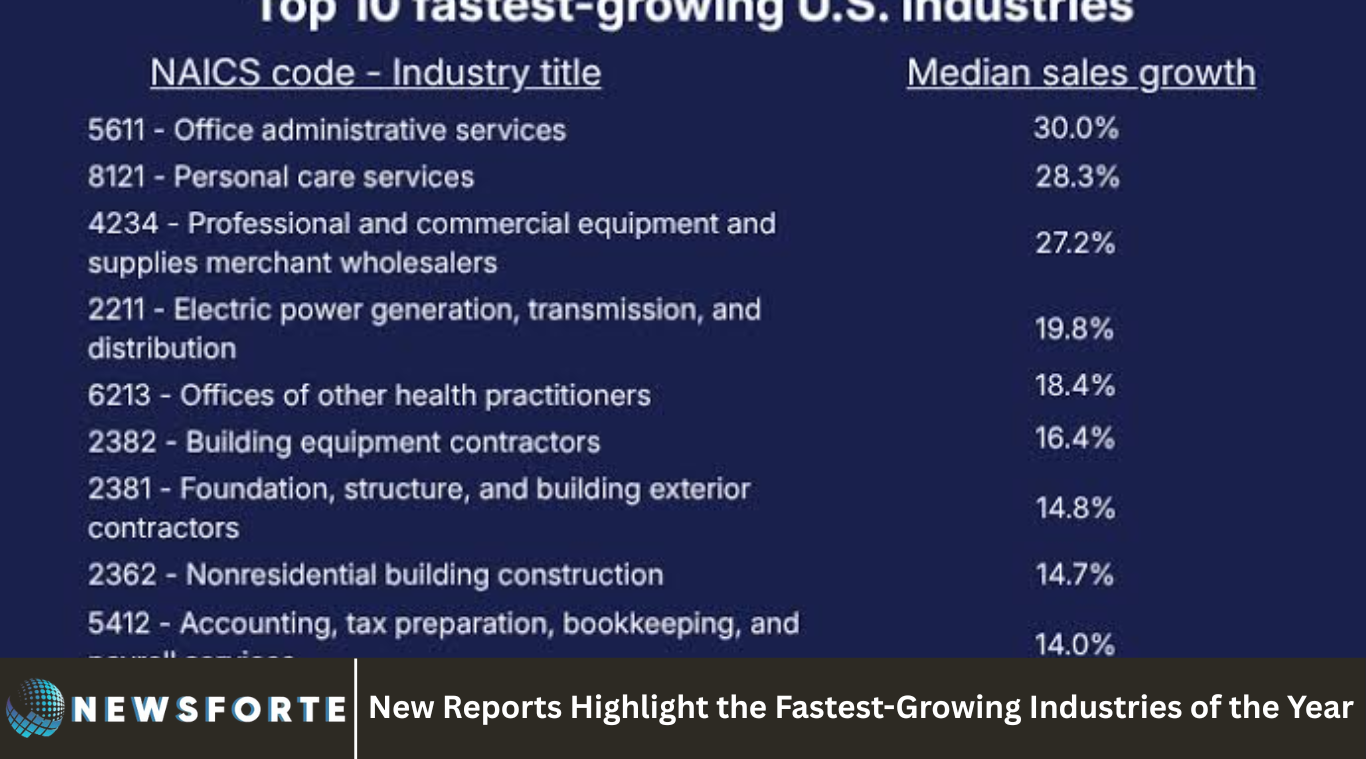
Industries around the world are changing rapidly as technology, consumer behavior, investment, and economic conditions continue to evolve. New industry reports are highlighting sectors that are experiencing strong growth and attracting increased attention from businesses, investors, and job seekers.
The fastest-growing industries are not limited to technology. Artificial intelligence, renewable energy, healthcare, e-commerce, cybersecurity, financial technology, electric mobility, and digital services are all experiencing important changes. These developments are creating new business opportunities while also changing the skills and services that companies need.
Why Some Industries Grow Faster
Industry growth is usually influenced by several factors rather than a single trend. Consumer demand, technological innovation, government policies, investment, demographic changes, and global economic conditions can all contribute to expansion.
Industries that solve important problems or respond to changing customer needs can experience particularly strong growth.
Technology is also helping businesses enter markets faster and reach customers in new ways.
Artificial Intelligence
Artificial intelligence has become one of the most influential technologies shaping modern industries.
Businesses are using AI for data analysis, automation, customer support, content creation, software development, research, and decision-making.
The growing demand for AI solutions is creating opportunities for companies developing models, applications, infrastructure, chips, and specialized business tools.
AI is also influencing industries outside traditional technology, including healthcare, finance, manufacturing, retail, and transportation.
Renewable Energy
The renewable energy industry continues to receive significant attention as countries and companies work toward cleaner energy systems.
Solar and wind power are expanding in many markets, while energy storage technologies are also developing.
Businesses are investing in renewable infrastructure to meet growing electricity demand and reduce dependence on certain traditional energy sources.
The industry is creating opportunities in engineering, manufacturing, installation, maintenance, and energy management.
Healthcare Technology
Healthcare technology is another rapidly developing sector.
Digital health platforms, remote consultations, wearable devices, electronic health systems, and AI-assisted tools are changing how healthcare services can be delivered.
Technology can help healthcare organizations manage information and improve efficiency.
As populations age and demand for healthcare services increases, technology may become increasingly important in supporting healthcare systems.
E-Commerce
Online retail continues to expand as consumers become more comfortable purchasing products through websites and mobile applications.
E-commerce companies are investing in better delivery systems, digital payments, personalized recommendations, and customer support.
Artificial intelligence is also helping retailers improve inventory management and understand consumer behavior.
The growth of online shopping is creating opportunities for retailers, logistics companies, payment providers, and digital marketing businesses.
Cybersecurity
As more organizations move their operations online, cybersecurity has become increasingly important.
Businesses need to protect customer information, financial systems, cloud infrastructure, and internal networks from cyber threats.
The growing number of connected devices and digital services creates additional security challenges.
This is increasing demand for cybersecurity professionals, security software, monitoring systems, and specialized services.
Financial Technology
Financial technology, often called fintech, is transforming how people and businesses manage money.
Digital banking, mobile payments, online lending, automated financial services, and other technologies are making financial services more accessible.
Fintech companies are competing with traditional financial institutions by offering convenient digital experiences.
The sector continues to attract investment as consumers increasingly use technology for everyday financial activities.
Electric Vehicles
Electric mobility is another industry experiencing significant development.
Automakers are expanding electric vehicle offerings while companies invest in charging infrastructure, batteries, software, and related technologies.
Electric vehicles are also encouraging growth in supporting industries.
Battery technology remains particularly important because improvements in range, charging speed, cost, and durability can influence consumer adoption.
Battery Technology
Battery technology has applications far beyond electric vehicles.
Energy storage systems can help support renewable electricity generation by storing power for use when demand is high or renewable production is low.
Businesses are investing in battery research to improve performance and reduce costs.
Advances in battery technology could influence transportation, energy, consumer electronics, and industrial applications.
Cloud Computing
Cloud computing continues to support the growth of digital businesses.
Companies use cloud infrastructure to operate applications, store data, scale services, and support remote work.
Cloud systems can allow businesses to access computing resources without maintaining all infrastructure themselves.
Demand for cloud services is also growing as companies adopt AI and data-intensive applications.
Data and Analytics
Data has become an important business resource.
Companies collect information about customers, products, markets, operations, and financial performance.
Data analytics tools help organizations identify patterns and make better decisions.
The growth of AI is increasing demand for high-quality data and professionals who can manage and interpret it.
Robotics and Automation
Robotics is expanding across manufacturing, warehouses, logistics, healthcare, and other industries.
Automated machines can perform repetitive tasks and support workers in complex environments.
Advances in sensors, AI, and machine learning are making robots more capable.
Businesses are interested in automation because it can improve efficiency and help address certain labor shortages.
Logistics and Delivery
The expansion of e-commerce is increasing demand for efficient logistics.
Companies need reliable systems for storing, transporting, tracking, and delivering products.
Automation and data analytics are helping logistics businesses optimize routes and warehouse operations.
As consumers expect faster deliveries, companies are investing in technology to improve their supply chains.
Digital Entertainment
Digital entertainment continues to change as consumers move toward streaming services, online gaming, social platforms, and other digital experiences.
Technology has made it easier for creators to reach global audiences.
Gaming is also expanding through mobile devices, cloud services, online communities, and emerging technologies.
The industry is creating opportunities for developers, designers, content creators, advertisers, and technology providers.
Software Development
Software remains essential across almost every modern industry.
Businesses need applications for communication, finance, customer management, operations, security, analytics, and automation.
The growing use of AI is also creating new software development opportunities.
Developers are increasingly building applications that combine traditional software with intelligent technologies.
Semiconductor Industry
Semiconductors are essential components of modern electronics.
They are used in smartphones, computers, vehicles, data centers, industrial equipment, and AI systems.
Growing demand for advanced computing is increasing attention on chip manufacturing and semiconductor research.
The industry is also strategically important because many countries want stronger domestic semiconductor capabilities.
Space Technology
The space industry is developing beyond traditional government programs.
Private companies are investing in satellite communications, launch systems, Earth observation, and other commercial space technologies.
Satellite services can support internet connectivity, navigation, agriculture, weather monitoring, and communications.
As launch costs and technology improve, commercial opportunities in space may continue expanding.
Agriculture Technology
Agriculture is also benefiting from technological innovation.
Farmers and agricultural companies are using sensors, satellite data, automation, drones, and AI to monitor crops and improve resource use.
Technology can help farmers manage water, fertilizer, pests, and crop conditions more efficiently.
Agricultural technology may become increasingly important as food demand grows and environmental pressures increase.
Food Technology
Food technology is another developing sector.
Companies are exploring new food production methods, alternative ingredients, automation, and supply chain improvements.
Consumers are also showing interest in convenient and innovative food products.
Technology can help businesses improve production efficiency while responding to changing consumer preferences.
Biotechnology
Biotechnology combines biology with advanced scientific techniques to develop products and solutions.
The sector includes areas such as medical research, diagnostics, agriculture, and industrial applications.
Advances in genetics, laboratory technology, and data analysis are creating new opportunities.
Biotechnology often requires significant research investment but can have major long-term effects.
Digital Education
Online education has become an important part of the global learning environment.
Students and professionals can access courses, training programs, tutorials, and educational resources through digital platforms.
Artificial intelligence can also support personalized learning and automated educational assistance.
As demand for flexible learning grows, education technology may continue expanding.
Tourism and Travel Technology
Technology is changing how people plan and experience travel.
Online booking platforms, mobile applications, digital payments, and personalized recommendations have transformed the travel industry.
Travel companies are using technology to improve customer service and manage reservations.
The recovery and expansion of global travel can create additional opportunities for technology-based services.
Construction Technology
The construction industry is also adopting new technologies.
Building information modeling, automation, drones, advanced materials, and digital project management tools can improve planning and efficiency.
Construction technology may become increasingly important as cities grow and infrastructure needs increase.
Green Technology
Green technology covers a wide range of products and services designed to improve environmental efficiency.
This includes renewable energy, energy-efficient buildings, electric transportation, recycling systems, and sustainable industrial processes.
Growing environmental awareness and policy support can create opportunities for companies developing these technologies.
The Role of Government Investment
Government policies can influence industry growth significantly.
Public investment, tax incentives, research funding, infrastructure programs, and regulations can encourage companies to invest in specific sectors.
Government support can be particularly important for industries that require large initial investments.
However, long-term growth generally depends on sustainable demand and commercial viability.
Consumer Behavior and Industry Growth
Changing consumer habits can create entirely new markets.
Consumers increasingly use mobile applications, digital payments, online shopping, streaming services, and connected devices.
Businesses that recognize these changes early can develop products and services that match new expectations.
Consumer demand is therefore an important driver of industry expansion.
Job Opportunities in Growing Industries
Fast-growing industries can create new employment opportunities.
AI, cybersecurity, renewable energy, healthcare technology, software development, logistics, and other sectors need skilled professionals.
Workers may benefit by developing technical skills while also improving communication, creativity, and problem-solving abilities.
Continuous learning can be particularly valuable in industries where technology changes quickly.
Challenges Facing Growing Industries
Rapid growth also creates challenges.
Companies may face shortages of skilled workers, increased competition, regulatory uncertainty, high investment costs, and technological risks.
Growing industries may also attract large amounts of investment, creating pressure on companies to demonstrate sustainable business models.
Growth alone does not guarantee long-term success.
Competition and Innovation
As an industry expands, more companies usually enter the market.
Competition can encourage businesses to improve products, reduce costs, and develop new technologies.
Consumers may benefit from greater choice and better services.
Companies that fail to innovate may struggle to maintain their position as markets become more competitive.
The Importance of Long-Term Growth
An industry experiencing rapid growth today may not remain the fastest-growing sector forever.
Markets change as technologies mature, consumer preferences shift, and new competitors emerge.
Businesses and investors therefore need to consider whether growth is sustainable.
Strong long-term industries often have expanding demand, useful technology, skilled workers, and opportunities for continued innovation.
What Businesses Should Watch
Companies should monitor technological developments, customer behavior, economic conditions, regulations, and investment trends.
Understanding where demand is moving can help businesses identify opportunities before markets become highly competitive.
Businesses can also benefit from studying related industries because growth in one sector often creates opportunities in another.
The Future of Fast-Growing Industries
The industries growing today may shape the economy of the future.
Artificial intelligence, renewable energy, healthcare technology, cybersecurity, e-commerce, robotics, biotechnology, and digital services are likely to remain important areas of innovation.
However, new technologies and unexpected market developments could create entirely new growth sectors.
Frequently Asked Questions
Which industries are growing the fastest?
Industries such as artificial intelligence, renewable energy, cybersecurity, healthcare technology, e-commerce, fintech, electric mobility, cloud computing, and robotics are experiencing significant growth and investment.
Why are technology industries growing so quickly?
Technology industries are growing because businesses and consumers increasingly depend on digital services, automation, AI, cloud computing, connected devices, and online platforms.
Are growing industries creating new jobs?
Yes. Fast-growing industries can create demand for engineers, developers, analysts, cybersecurity specialists, researchers, technicians, managers, and other professionals.
Can small businesses benefit from growing industries?
Yes. Small businesses can benefit by providing specialized services, adopting new technologies, serving emerging customer needs, or entering growing digital markets.
Will today’s fastest-growing industries remain successful?
Not necessarily. Industry growth can change as technology develops, consumer preferences shift, regulations change, and new competitors enter the market. Long-term success depends on sustainable demand and continued innovation.
Conclusion
New reports highlighting the fastest-growing industries show how quickly the global economy is changing. Technology continues to influence growth across artificial intelligence, e-commerce, cybersecurity, renewable energy, healthcare, fintech, electric vehicles, software, robotics, and many other sectors.
These industries are creating new business opportunities and changing the skills employers need. However, rapid growth also brings competition, investment challenges, regulatory concerns, and workforce demands. Businesses and professionals that understand emerging trends and continue adapting to technological and consumer changes may be better prepared to benefit from the industries shaping the future economy.