

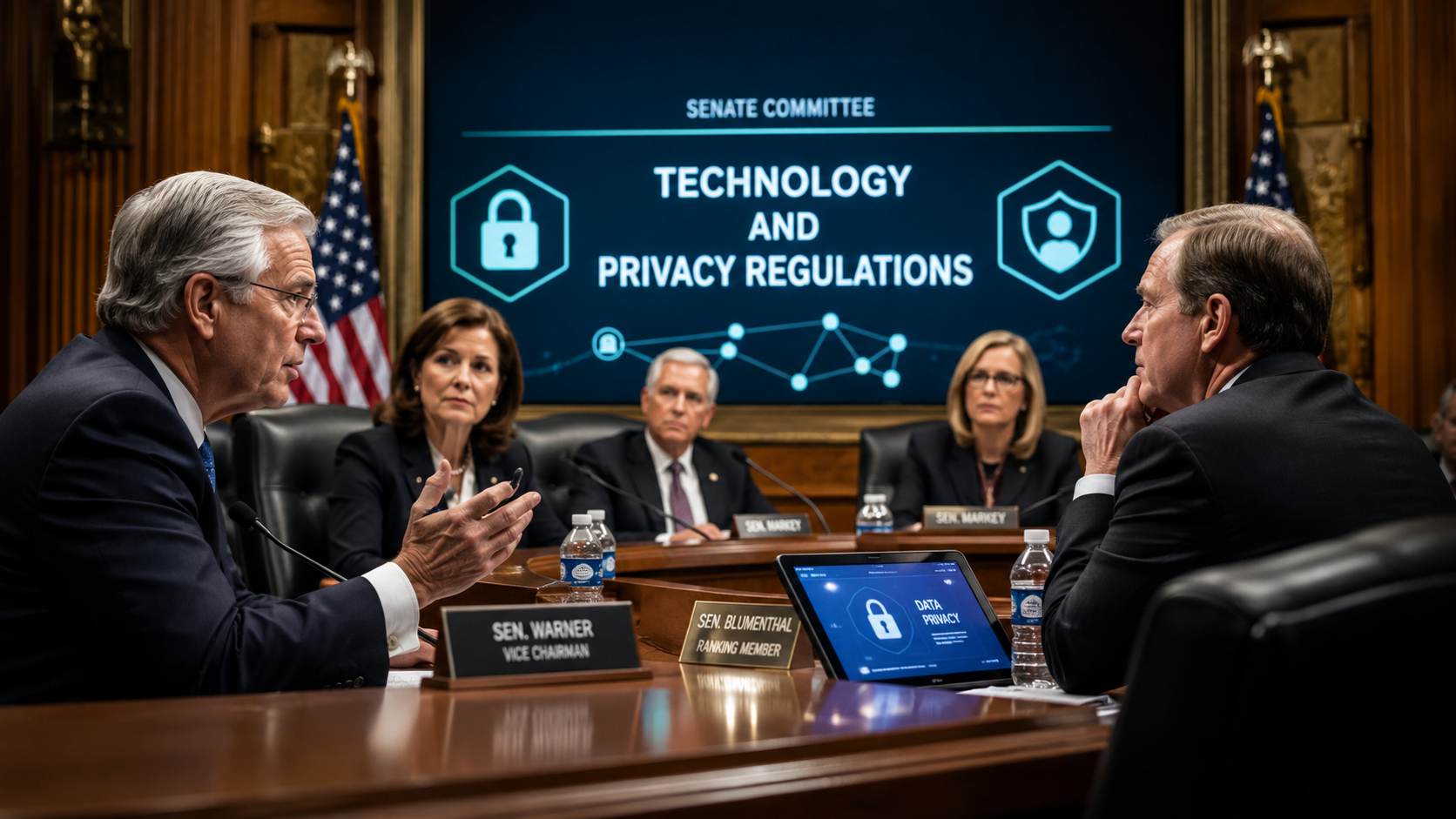
Washington is once again turning its attention to the way technology companies collect, store, and use personal information. Senate leaders discuss new technology and privacy regulations almost every session these days, but the conversations happening right now feel different in tone and urgency.
Lawmakers on both sides of the aisle are acknowledging that the patchwork of state laws, combined with rapid advances in artificial intelligence, has created a level of confusion that neither consumers nor businesses can navigate comfortably. For years, comprehensive federal privacy legislation has been discussed, drafted, and shelved. This time, there’s a sense that the stakes have changed.
Between AI-powered products entering homes and workplaces, data brokers operating with little oversight, and children’s online safety becoming a bipartisan rallying point, the pressure on Congress to act has grown louder. This article breaks down what senators are actually talking about, why it matters, and what could happen next.
Why Privacy Regulation Is Back in the Spotlight
Technology has outpaced the legal frameworks meant to govern it, and that gap has only widened. Artificial intelligence tools now analyze behavioral patterns, predict purchasing habits, and even generate synthetic media that can mimic real people. Meanwhile, many of the laws currently protecting consumer data were written before smartphones became ubiquitous, let alone before generative AI entered everyday life.
Senate leaders discuss new technology and privacy regulations partly because their constituents are asking for it. Polling consistently shows that Americans across party lines want stronger control over their personal data. That shared concern has created rare common ground in an otherwise divided Congress, even if the specific policy details remain contested.
The State Patchwork Problem
One of the biggest drivers behind renewed federal interest is the growing patchwork of state privacy laws. States including California, Connecticut, Colorado, and Delaware have all advanced or updated their own consumer data privacy statutes. While these efforts reflect genuine progress at the state level, they also create compliance headaches for businesses operating nationally.
A company selling products in all fifty states may need to comply with dozens of different definitions of “personal information,” different consent requirements, and different enforcement mechanisms. Many senators argue that a single federal standard would simplify this landscape, protect consumers more consistently, and reduce the burden on smaller businesses that lack large legal teams.
What’s Actually Being Discussed in the Senate
Several proposals are circulating that give a clear picture of where lawmakers’ priorities currently sit. These conversations tend to focus on a handful of recurring themes.
Data Collection and Consent
A central theme in ongoing discussions is how companies obtain, and ideally must justify, consent before collecting personal data. Some proposals would require clearer opt-in mechanisms rather than the buried, hard-to-find opt-out settings many platforms currently use. Others focus on limiting “behavioral personalization,” meaning the algorithms that decide what content, ads, or recommendations a person sees based on their online activity.
The goal behind these provisions is to give individuals more meaningful control over their digital footprint, rather than requiring them to comb through lengthy terms of service agreements to understand how their information is being used.
Children’s Online Safety
Few issues generate as much bipartisan agreement as protecting minors online. Senate leaders discuss new technology and privacy regulations for children’s safety with noticeably less friction than other privacy topics, since there’s broad agreement that kids deserve stronger safeguards regardless of political affiliation.
Proposals in this space include age verification requirements, restrictions on data collection from younger users, and limits on algorithmic features designed to maximize engagement among children. Some state-level bills have already moved to prohibit certain platforms from allowing account creation for users under a specific age threshold, and federal lawmakers are watching those efforts closely as they consider similar language.
Artificial Intelligence Oversight
AI has added a new layer of complexity to privacy discussions. Lawmakers are grappling with questions about how AI systems use personal data to train models, how synthetic media and deepfakes should be regulated, and whether companies should be required to disclose when a person is interacting with an AI system rather than a human.
Some hearings have specifically examined AI-enabled products, including internet-connected toys and devices marketed to children, after researchers found troubling gaps in how these products handle sensitive information. These findings have added urgency to calls for testing frameworks and temporary restrictions while more permanent rules are developed.
Data Brokers and Third-Party Sharing
Data brokers, companies that collect and resell personal information often without a direct relationship with the consumer, have become a frequent target of proposed legislation. Several state bills have introduced registration requirements for data brokers, and similar concepts are appearing in federal proposals. The idea is to create more transparency around who is buying and selling personal data, and to give individuals a clearer path to request that their information be removed from these databases.
The Push for a Federal Enforcement Agency
One of the more ambitious ideas circulating involves creating a dedicated federal agency to enforce privacy protections. Rather than relying solely on the Federal Trade Commission, which already handles a broad range of consumer protection issues, some proposals envision a new body focused specifically on digital privacy enforcement.
Supporters argue that a dedicated agency would have the technical expertise and resources needed to keep pace with fast-moving technology. Critics worry about the cost of standing up a new federal bureaucracy and question whether existing agencies could be strengthened instead. This disagreement reflects a broader tension in the privacy debate: how much new government infrastructure is necessary versus how much can be achieved through updated rules and stronger enforcement of existing law.
Where Bipartisan Agreement Exists (and Where It Doesn’t)
There’s genuine consensus that federal privacy legislation is overdue. Republicans and Democrats alike acknowledge that consumers deserve stronger protections, and both parties have expressed frustration with tech companies collecting and monetizing data with minimal transparency.
Disagreement tends to emerge around two specific issues.
The first is preemption, meaning whether a federal privacy law should override or coexist with state laws like California’s Consumer Privacy Act. Some lawmakers worry that federal preemption would weaken protections in states that have already passed stronger rules, while others argue that a single national standard is necessary to avoid the compliance chaos described earlier.
The second sticking point is private right of action, or whether individuals should be able to sue companies directly for privacy violations rather than relying solely on government enforcement. Consumer advocates generally favor giving individuals this right, while business groups tend to argue it would open the door to excessive litigation.
What This Could Mean for Businesses
Companies of all sizes are watching these discussions closely, and for good reason. New privacy regulations, if passed, would likely require updates to data collection practices, consent mechanisms, internal compliance processes, and vendor relationships involving data sharing. Businesses that already comply with stricter state laws, such as those in California or Connecticut, may find themselves better positioned than companies operating in states with fewer existing requirements.
Smaller businesses in particular have raised concerns about compliance costs, especially if new rules require significant investment in legal review, data mapping, or technical infrastructure. Many senators have acknowledged this concern and indicated that any final legislation would likely include phased implementation timelines or exemptions for smaller entities, though the specifics remain under negotiation.
What This Could Mean for Everyday Consumers
For the average person, the practical effects of new privacy legislation would likely show up in small but meaningful ways. Clearer consent screens, easier ways to request that a company delete personal data, and more transparency around how algorithms shape what people see online are among the most commonly discussed consumer-facing changes.
Parents in particular stand to benefit from provisions focused on children’s online safety, including stronger default privacy settings for younger users and restrictions on data collection from minors. While these changes won’t happen overnight, they represent a shift toward giving individuals more visibility and control over their digital lives.
What Happens Next
Predicting the exact path of federal legislation is always difficult, especially given how many previous privacy bills have stalled in Congress. That said, several factors suggest this round of discussions may carry more momentum than past attempts.
Public awareness of data privacy issues has grown substantially. State-level momentum is creating pressure for federal action to avoid further fragmentation. And the rapid rise of AI has introduced new risks that lawmakers feel they can no longer afford to ignore. Whether that translates into a signed law depends on how negotiators handle the preemption and enforcement questions that have derailed previous efforts.
In the meantime, expect continued hearings, competing bill introductions, and public statements from senators on both sides as they work toward, or away from, a compromise.
Frequently Asked Questions
Why are Senate leaders discussing new technology and privacy regulations now?
Rapid growth in AI, a growing patchwork of state privacy laws, and increased public concern about data collection have combined to push privacy legislation back onto the Senate’s active agenda.
Is there a federal privacy law in the United States right now?
No single comprehensive federal privacy law currently exists. Protections are handled through a mix of state laws, sector-specific federal rules, and enforcement by agencies like the FTC.
What is federal preemption in the context of privacy law?
Preemption refers to whether a new federal privacy law would override state privacy laws. It’s one of the most contested issues in current negotiations.
What is a private right of action?
It’s a legal provision that would allow individuals, not just government agencies, to sue companies directly over privacy violations.
How would new regulations affect small businesses?
Small businesses may face new compliance requirements, though lawmakers have discussed phased timelines or exemptions to ease the transition.
Are children’s privacy protections part of these discussions?
Yes, children’s online safety is one of the few areas with strong bipartisan support, including proposals for age verification and data collection limits.
When could new privacy legislation actually pass?
There’s no confirmed timeline. Similar efforts have stalled in previous sessions, though current momentum suggests renewed possibility for progress.
Conclusion
The conversation around technology and privacy regulation is no longer a niche policy issue; it’s a mainstream concern shared by parents, business owners, and everyday internet users alike. As Senate leaders discuss new technology and privacy regulations, the outcome will shape how personal data is collected, used, and protected for years to come.